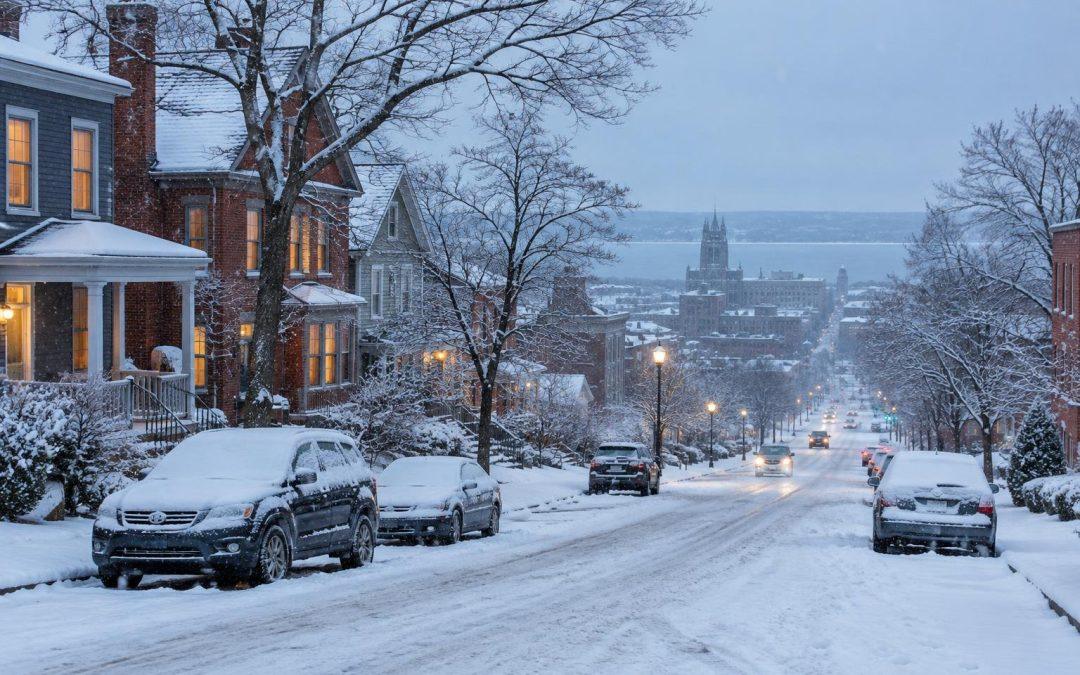
Snow, freezing rain and black ice are familiar hazards on roads around Syracuse and Central New York. When a collision happens in winter weather, it is tempting to assume that the road was simply too slippery for anyone to avoid a crash. But weather alone does not answer who may be responsible. Drivers still have to use reasonable care and adjust to conditions, and the details of each collision matter.
If you were hurt in a winter crash, understanding how fault and insurance are evaluated can help you make informed decisions. A car accident attorney in Syracuse, NY can review the circumstances, explain possible options and help you understand which deadlines may apply.
Does bad weather automatically excuse a driver?
No. Snow or ice can contribute to a crash, but it does not automatically excuse a driver from responsibility. New York law requires drivers to travel at a speed that is reasonable and prudent under the conditions and in view of actual and potential hazards. A posted speed limit is not necessarily a safe speed when visibility is poor or pavement is slick.
That does not mean every winter collision is caused by another driver. A sudden patch of ice, limited visibility, road design, vehicle condition and the actions of everyone involved may all be relevant. An investigation looks at the full setting—not just the fact that it was snowing.
What details can matter in a winter crash?
Small details can help explain how a collision unfolded. Investigators and insurers may consider the road surface, lighting, visibility, traffic, vehicle positions and whether a driver had time or space to react. They may also look at how fast each vehicle was traveling for the conditions and whether drivers left enough following distance.
Other facts may matter, too. Was a windshield or window obstructed by snow? Were headlights visible? Did a vehicle slide into another car after its driver lost control, or was it struck by a driver who could not stop in time? In a chain-reaction crash, more than one person’s conduct may be part of the analysis.
Weather and road-condition records, photographs, witness accounts, vehicle damage and available video may provide useful context. Evidence can be harder to preserve in winter: snow melts, road conditions change and vehicles are moved or repaired. If you can do so safely, keep photographs and records, and note the time, location and conditions. Do not put yourself in danger to collect evidence.
How New York handles shared responsibility
There may be more than one contributing factor in a crash. New York follows a comparative-fault approach, meaning a person's share of responsibility can affect the amount of damages they may recover. An insurer may argue that an injured person contributed to the collision, but an initial insurance position is not the same as a final legal determination.
For example, one driver may have been traveling too fast for the conditions while another made an unsafe lane change. The evidence—not a blanket assumption that “the ice caused it”—is needed to assess what happened. A Syracuse car accident lawyer can help review questions about how fault is being assigned and what evidence may be important.
What if a snowplow, road condition or vehicle problem was involved?
Winter crashes do not always involve only two drivers. A snowplow may be part of the sequence, a road hazard may have contributed, or a mechanical problem may have affected a vehicle’s ability to stop or steer. The facts determine whether any additional person or organization could have legal responsibility. Claims involving public entities can have special procedures and shorter notice requirements, so it is important to seek case-specific advice promptly if a public road or vehicle may be involved.
Do not assume that a road’s icy condition proves that a municipality or other party was negligent. The cause of the hazard, who controlled the area, what notice may have existed and the timing of any response can all matter. Similarly, a driver who slides is not automatically at fault in every case; the surrounding circumstances need to be considered.
Know the difference between no-fault benefits and a liability claim
New York’s no-fault system generally provides personal injury protection benefits for certain covered economic losses after a motor vehicle crash, regardless of who caused it. These benefits are separate from a claim against a driver who may have caused the collision. Depending on the policy and circumstances, no-fault benefits can help with eligible medical expenses, lost earnings and certain other expenses, subject to applicable limits and requirements.
Deadlines are important. New York’s Department of Financial Services says written notice of a no-fault claim generally must be given as soon as reasonably practicable and no later than 30 calendar days after the crash, unless a recognized justification for late notice applies. Insurer forms and requests may carry additional deadlines. Contact the relevant insurer promptly and keep copies of what you submit.
A separate claim for pain and suffering in a New York motor vehicle case may be subject to the state’s serious-injury threshold, among other legal requirements. Whether that threshold is met depends on the facts and applicable law; the severity of a crash by itself does not answer the question. Because insurance benefits, fault and injury claims involve different rules, avoid assuming that one claim or form takes care of everything.
Practical steps after a winter collision
Your immediate safety comes first. Call emergency services if anyone may be seriously hurt or there is an immediate danger. If it is safe, move away from traffic, exchange information and follow instructions from responding authorities. Seek appropriate medical evaluation for injuries and keep records of care and expenses.
When you are able, write down what you remember while the details are fresh. Save photographs, messages, repair documents, insurance letters and contact information for witnesses. Be careful when giving recorded statements or signing documents you do not understand; you can ask an attorney to explain what a request means before responding.
Promptly report the collision to the appropriate insurer and pay attention to written deadlines. Keep your own copies of claim forms and correspondence. Avoid posting detailed commentary about the crash or your injuries on social media, where statements may be taken out of context.
Getting help with a Syracuse winter crash
Every winter collision is different. A careful review may involve weather and road conditions, driver conduct, available records, insurance coverage and the nature of the injuries. The personal injury services offered by Nichols Law Offices include car accident matters. You can also learn more about Craig K. Nichols and his practice.
Head impacts and other injuries can be difficult to assess from the roadside. If you have concerns about a possible brain injury, seek medical care and consider reviewing information about a brain injury lawyer.
If a winter-weather crash in Syracuse or elsewhere in Central New York left you injured, contact us today to discuss your situation. Call (315) 445-8763.
Frequently Asked Questions
Does black ice automatically excuse a driver who causes a crash?
No. Weather may contribute to a crash, but drivers are still expected to use reasonable care and adjust their driving to conditions. Responsibility depends on the facts of the collision.
How soon should I notify the no-fault insurer?
New York generally requires written notice of a no-fault claim as soon as reasonably practicable and no later than 30 calendar days after the crash, subject to limited exceptions. Contact the insurer promptly and keep copies of your communications.
Are no-fault benefits the same as a claim against the other driver?
No-fault benefits and a claim against a potentially responsible driver are separate. Eligibility, coverage, limits and requirements depend on the policy and circumstances.
What evidence should I keep after a winter car accident?
If you can do so safely, keep photos, witness contact details, insurance correspondence and notes about the road and weather conditions. Avoid risking your safety to gather evidence at the scene.
Can a municipality be responsible for an icy road crash?
Possibly, but a road’s icy condition alone does not establish responsibility. Control of the area, the cause of the hazard, notice and applicable claim procedures may all matter.
Sources
- Chapter 10: Special Driving …
- DMV, GTSC Remind Motorists to Prepare for Winter Driving
- DMV, GTSC, and Other State Agencies Offer Drivers Tips To Prepare For ...
- New York State Driver's Manual - NY DMV
- Be Prepared for Safe Winter Driving - dot.ny.gov
- Long Island Ice & Black Ice Car Accident Lawyer —... | JTNY
- Who Is Liable for a Crash on Black Ice in New York?
- GTSC Advises Safer Winter Driving Speeds - NY DMV